 Virginia Tech Dendrology
Koreanspice viburnum Caprifoliaceae Viburnum
carlesii Hemsl.

 symbol: VICA19
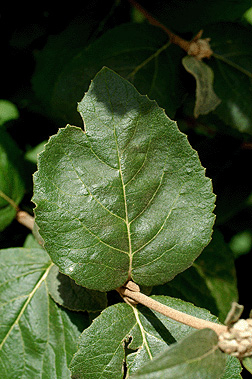
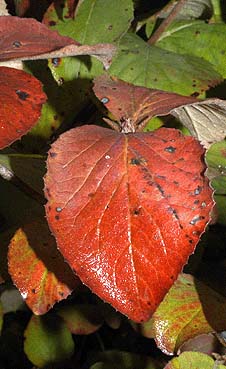
Leaf: Opposite, simple, broadly ovate, coarsely and irregularly toothed, 2 to 4 inches long, dull green and pubescent above, paler and pubescent beneath.
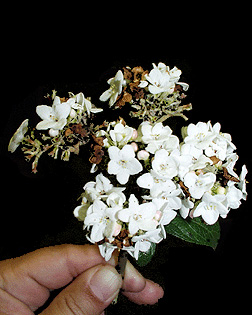
Flower: Showy, displayed in 2 to 4 inch dense, terminal clusters of white (may be tinged in pink) flowers, each 1/2 inch across, 5 petals, very fragrant, appearing with the leaves.
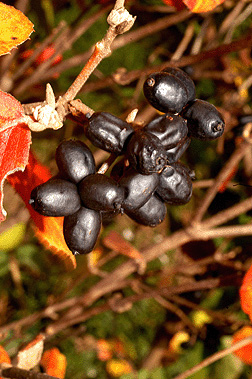
Fruit: Elliptical drupe, 1/3 inch long, somewhat flattened, brick red in the fall but turning black after frosts.
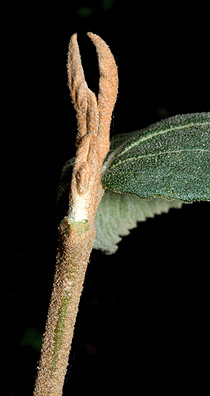
Twig: Slender, scruffy gray-brown, developing a distinctive fissuring with age; vegetative buds are naked and scruffy gray-brown; flower buds in large terminal clusters (1/4 to 1/2 inch across).
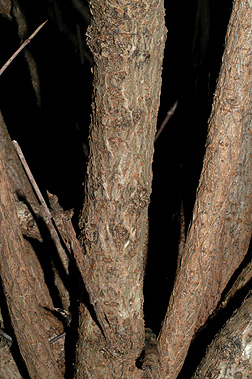
Bark: Smooth gray-brown with numerous lenticels and shallow vertical fissuring.
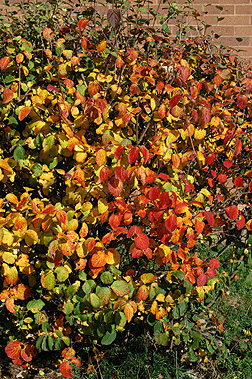
Form: A rounded, moderately dense shrub reaching 4 to 6 feet tall.
Looks like: Burkwood viburnum
- wayfaringtree viburnum
- linden viburnum
- doublefile viburnum
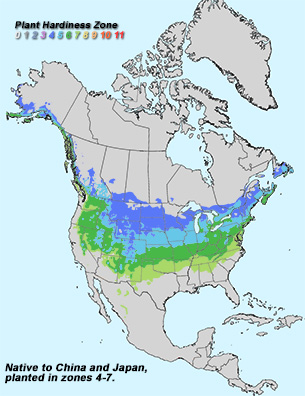
Additional Range Information: Viburnum carlesii is planted in the USDA hardiness zones shown above and is not known to widely escape cultivaton. Download the full-size PDF map.
More Information: Fall Color
External Links: USDA Plants Database
All material © 2021 Virginia Tech Dept. of Forest Resources and Environmental Conservation; Photos and text by: John Seiler, Edward Jensen, Alex Niemiera, and John Peterson; Silvics reprinted from Ag Handbook 654; range map source information