 Virginia Tech Dendrology
western viburnum Caprifoliaceae Viburnum
ellipticum Hook.

 symbol: VIEL
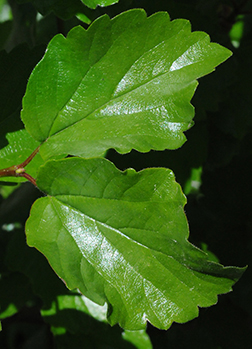
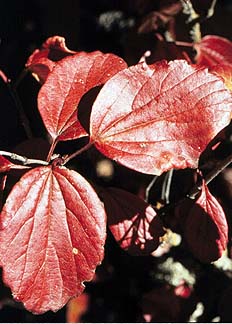
Leaf: Opposite, simple, deciduous, broadly oval to almost round, 1 to 3 inches long, upper margins are coarsely toothed, 3-5 conspicuous veins from the base, petioles are covered with spreading coarse hairs and often short raised glands; dark green and glabrous above, lighter green and covered with short stiff hairs below.
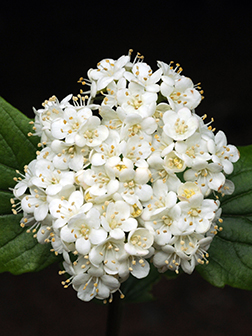
Flower: Perfect, appear in a terminal cluster of small white flowers (cyme) measuring 1 to 2 inches across, individual flowers are five-lobed and measure 1/4 inch across, stamens exerted from the mouth of the flower; appear in mid-spring.
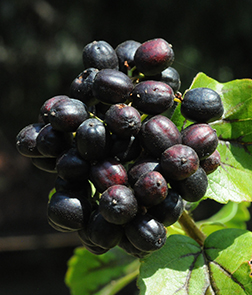
Fruit: Ellipsoidal, purple to black drupe, 1/3 to 1/2 inch long. Each fruit contains a large, flattened stone-like seed.
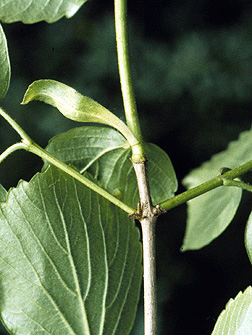
Twig: Slender, distinct opposite branching, keeled and ribbed below leaf scars, gray with shades of green or red, lenticels are inconspicuous on young twigs but become warty as twigs age; bud scales are reddish brown and hairy along their margins.
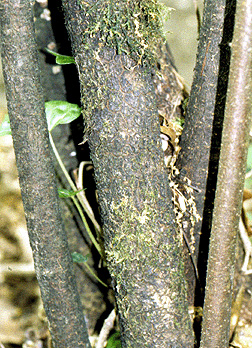
Bark: Reddish brown to grayish brown.
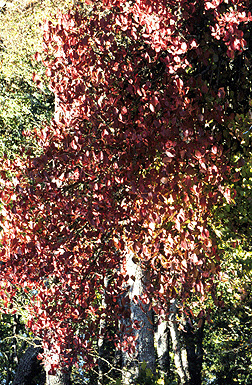
Form: Loosely branched deciduous shrub growing 3 to 10 feet tall.
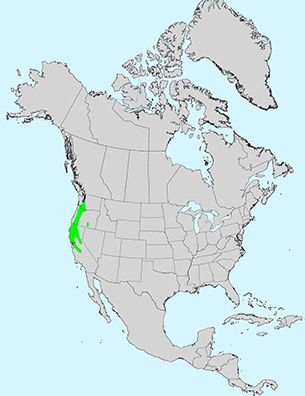
Additional Range Information: Viburnum ellipticum is native to North America. Range may be expanded by planting. Download the full-size PDF map.
More Information: Fall Color
External Links: USDA Plants Database
All material © 2021 Virginia Tech Dept. of Forest Resources and Environmental Conservation; Photos and text by: John Seiler, Edward Jensen, Alex Niemiera, and John Peterson; Silvics reprinted from Ag Handbook 654; range map source information