 Virginia Tech Dendrology
Everglades palm Arecaceae Acoelorrhaphe
wrightii (Griseb. & H. Wendl.) H. Wendl. ex Becc.

 symbol: ACWR4
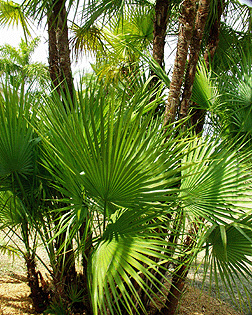
Leaf: Alternate, fan shaped, approximately 3 feet long, palmately deeply divided, bright green above and below, leaf stalk sharply armed with orange spines.
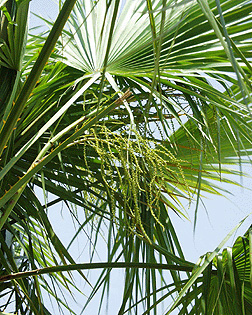
Flower: Small white flowers occurring on large (several feet), upright branched clusters.
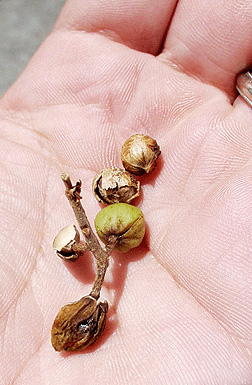
Fruit: Fleshy drupe, nearly round, reddish-brown to purple-black when ripe, borne on drooping clusters.
Twig: Absent, since leaves appear directly out of an unbranched trunk.
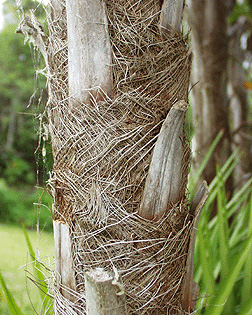
Bark: Rough and fibrous, wrapped in old reddish brown leaf bases.
Form: Distinct clumps of upright small trees that originate from root suckers, with slender stems and small tufts of of leaves. May form dense hedges.
Looks like: saw palmetto
- bush palmetto
- cabbage palmetto
- needle palm
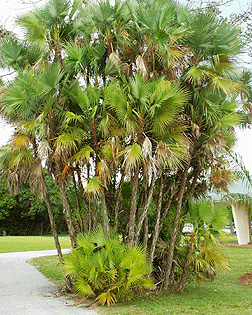
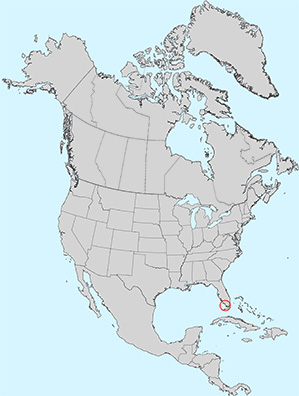
Additional Range Information: Acoelorrhaphe wrightii is native to North America. Range may be expanded by planting. Download the full-size PDF map.
External Links: USDA Plants Database
All material © 2021 Virginia Tech Dept. of Forest Resources and Environmental Conservation; Photos and text by: John Seiler, Edward Jensen, Alex Niemiera, and John Peterson; Silvics reprinted from Ag Handbook 654; range map source information