 Virginia Tech Dendrology
big huckleberry Ericaceae Vaccinium
membranaceum Douglas ex Torr.

 symbol: VAME
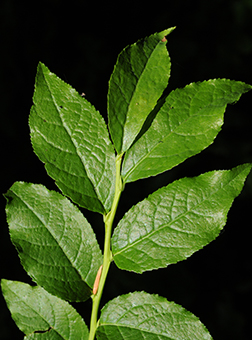
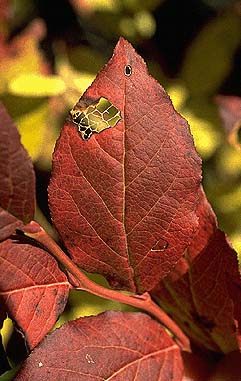
Leaf: Alternate, simple, deciduous, elliptical, ovate, or obovate, 1/2 to 1 1/2 inches long, margins finely toothed; pale green and slightly glaucous above and paler below, red to purple in the fall.
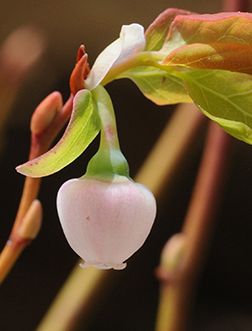
Flower: Perfect, small (1/4 inch long); solitary; nodding; pinkish; corolla fused and nearly round; borne singly in leaf axils; appear in mid-spring.
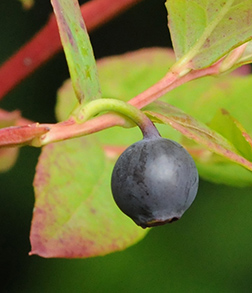
Fruit: Small (1/4 to 1/2 inch diameter) purple to black berries, almost without bloom; ripen in late summer, delicious.
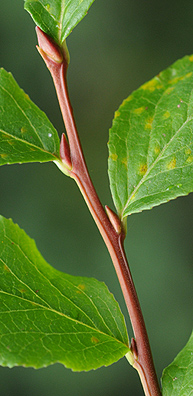
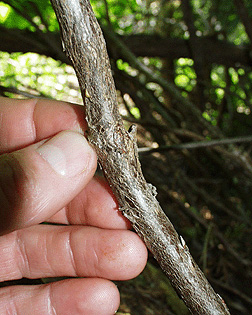
Twig: Young branches are yellow-green and somewhat angled; older branches have gray, shedding bark.
Bark: Gray and shreddy.
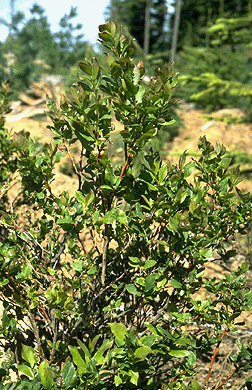
Form: An upright, densely branched deciduous shrub commonly growing 3 to 6 feet tall.
Looks like: ovalleaf huckleberry
- velvet-leaf blueberry
- bilberry
- dwarf bilberry
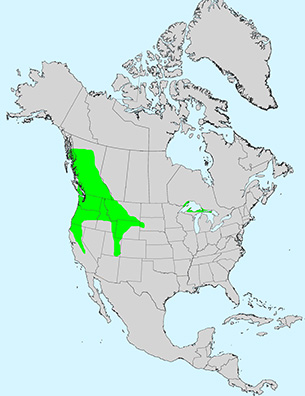
Additional Range Information: Vaccinium membranaceum is native to North America. Range may be expanded by planting. Download the full-size PDF map.
More Information: Fall Color
External Links: USDAFS FEIS Silvics - USDA Plants Database
All material 2025 Virginia Tech Dept. of Forest Resources and Environmental Conservation; Photos and text by: John Seiler, Edward Jensen, Alex Niemiera, and John Peterson; Silvics reprinted from Ag Handbook 654; range map source information