 Virginia Tech Dendrology
Himalaya blackberry Rosaceae Rubus
armeniacus Focke

 symbol: RUAR9
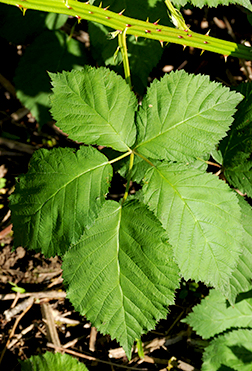
Leaf: Alternate, palmately compound (usually 5 leaflets), persistent (often barely); leaflets oval, 1 1/2 to 3 inches long, dark green above with a heavy white bloom below, margins serrate. Rachis and petiole armed with heavy, recurved prickles.
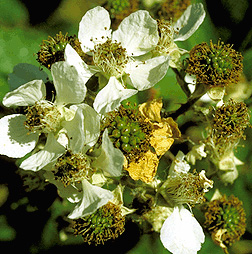
Flower: Perfect, complete, large (about 1 inch in diameter), white to pinkish, and borne in clusters of 5 to 20.
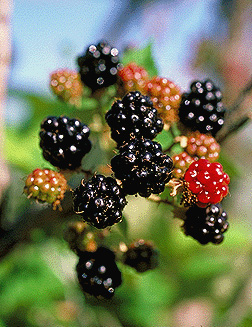
Fruit: Black aggregate of drupelets about 1 inch long; adheres to torus (central core) when removed from plant. Very edible.
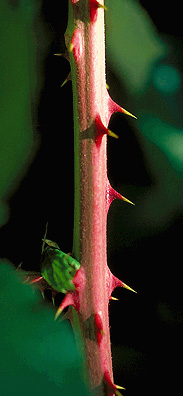
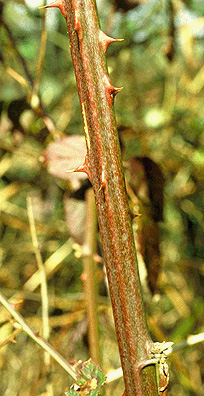
Twig: Stout, heavily ribbed; purplish-red, armed with heavy, red, recurved prickles.
Bark:
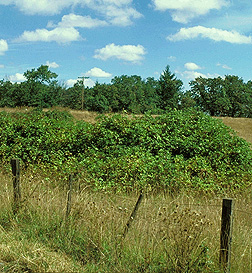
Form: An erect, spreading, or trailing evergreen shrub that gets very large and grows in dense, impenetrable thickets. Young stems are erect, but arch as they lengthen, eventually touching the ground and rooting at the nodes.
Looks like: evergreen blackberry
- whitebark raspberry
- salmonberry
- wild blackberry
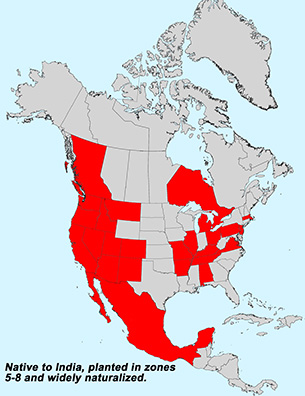
Additional Range Information: Rubus armeniacus is planted in the USDA hardiness zones shown above and may seed into the landscape. Download the full-size PDF map.
External Links: USDAFS FEIS Silvics - USDA Plants Database
All material © 2021 Virginia Tech Dept. of Forest Resources and Environmental Conservation; Photos and text by: John Seiler, Edward Jensen, Alex Niemiera, and John Peterson; Silvics reprinted from Ag Handbook 654; range map source information