 Virginia Tech Dendrology
American sycamore Platanaceae Platanus
occidentalis L.


 symbol: PLOC
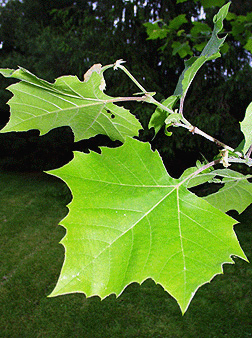
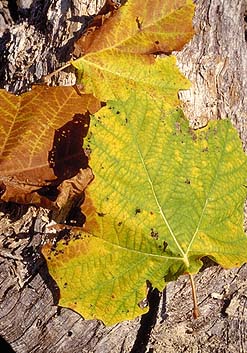
Leaf: Alternate, simple, palmately veined, 4 to 8 inches wide, ovate in shape, with three to five lobes, margins coarsely toothed, petiole bases encircle and enclose the buds, veins may be pubescent below.
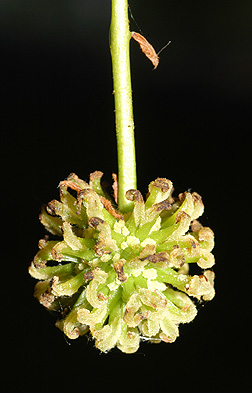
Flower: Species is monoecious; imperfect, both male and females are very small and appear in dense round clusters, typically a single cluster to a stalk, appearing with the leaves.
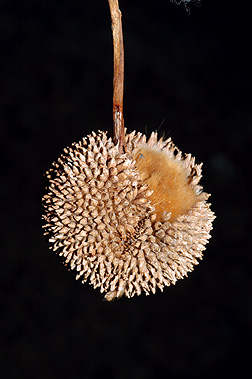
Fruit: A spherical multiple of achenes borne on a 3 to 6 inch stalk. Each seed is tiny, winged, and 1/2 inch long; maturing in November, disseminating in late winter.
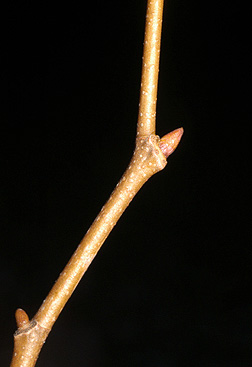
Twig: Obviously zigzag, quite stout and orange-brown in color; leaf scar surrounds the bud and the stipule scar surrounds the twig; terminal bud is absent; lateral buds are reddish, resinous, with a single, cap-like scale.
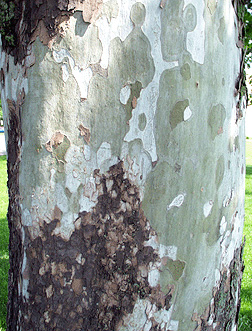
Bark: Thin, mottled brown, green, tan and white; older stems are gray-brown and scaly. The most striking feature of this tree, often referred to as "camouflage" bark that readily exfoliates.
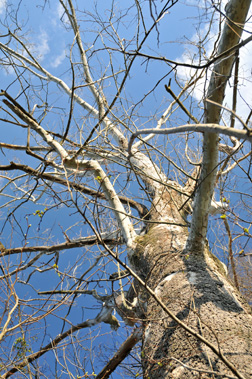
Form: A very massive tree with heavy, spreading branches with obviously zigzag twigs reaching up to and over 100 feet tall. In winter, the persistent fruits resemble Christmas tree ornaments.
Looks like: London plane tree
- California sycamore
- Arizona sycamore
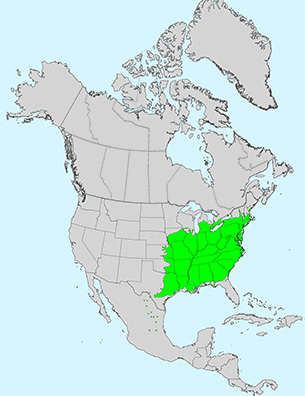
Additional Range Information: Platanus occidentalis is native to North America. Range may be expanded by planting. Download the full-size PDF map.
More Information: Fall Color - Wood

External Links: USDAFS Silvics of North America - USDAFS FEIS Silvics - USDA Plants Database - Horticulture Information - USDAFS Forest Products Lab
All material © 2021 Virginia Tech Dept. of Forest Resources and Environmental Conservation; Photos and text by: John Seiler, Edward Jensen, Alex Niemiera, and John Peterson; Silvics reprinted from Ag Handbook 654; range map source information