 Virginia Tech Dendrology
loblolly pine Pinaceae Pinus
taeda L.


 symbol: PITA
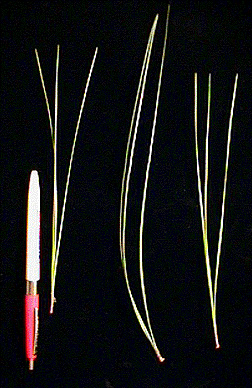
Leaf: Evergreen needles, 6 to 9 inches long, with (usually) three yellow-green needles per fascicle.
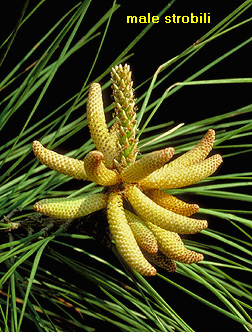
Flower: Species is monoecious; males long cylindrical, red to yellow, in clusters at branch tips; females yellow to purple.
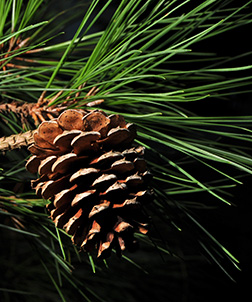
Fruit: Ovoid to cylindrical, 3 to 6 inch red-brown cones; umbo is armed with a short spine, maturing in early fall.
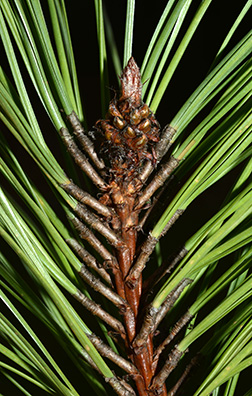
Twig: Orange-brown in color, fine to moderately stout; buds are narrowly ovoid, light reddish brown.
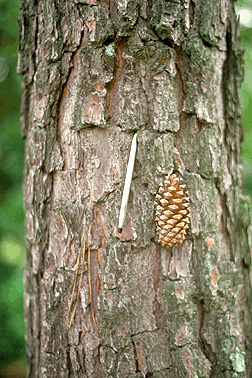
Bark: Initially red- to gray-brown and scaly; older trees are ridged and furrowed, with somewhat rounded scaly plates; very old trees have red-brown, flat scaly plates.
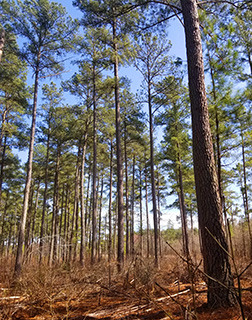
Form: A medium to large tree can reach well over 100 feet tall, self-prunes well and develops a fairly straight trunk and an oval, somewhat open crown.
Looks like: pitch pine
- pond pine
- slash pine
- shortleaf pine
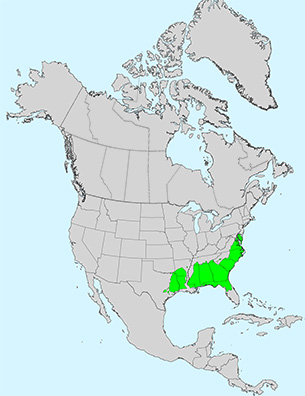
Additional Range Information: Pinus taeda is native to North America. Range may be expanded by planting. Download the full-size PDF map.
More Information: Wood

External Links: USDAFS Silvics of North America - USDAFS FEIS Silvics - USDA Plants Database - Horticulture Information - USDAFS Forest Products Lab
All material © 2021 Virginia Tech Dept. of Forest Resources and Environmental Conservation; Photos and text by: John Seiler, Edward Jensen, Alex Niemiera, and John Peterson; Silvics reprinted from Ag Handbook 654; range map source information