 Virginia Tech Dendrology
silky dogwood Cornaceae Cornus
amomum Mill.


 symbol: COAM2
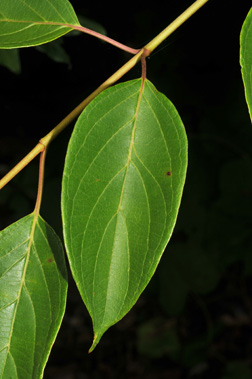
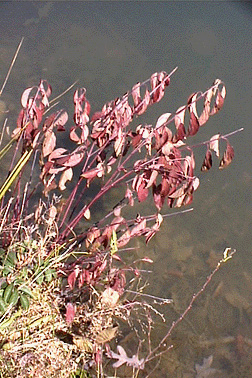
Leaf: Opposite, simple, oval, 2 to 4 inches long, arcuately veined, margin entire, green above and maybe silky grayish when young, paler below.
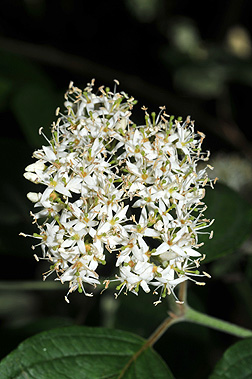
Flower: Species is monoecious; small, white, in flat-topped clusters, 2 inches in diameter that appear in late spring and early summer.
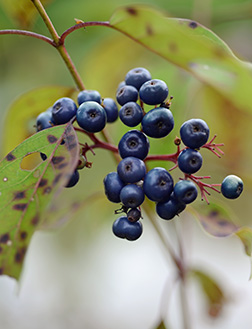
Fruit: Berry-like drupes developing in flat-topped clusters, 1/4 inch in diameter, bluish with white blotches, maturing in late summer.
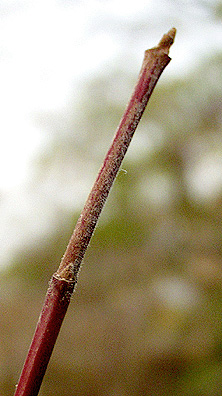
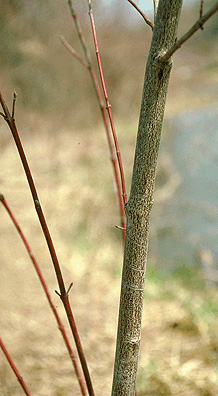
Twig: Red-purple (may be green-tinged), bearing silky gray hairs with a salmon colored pith, buds are narrow, pointed, hairy, sessile, and close to the stem.
Bark: At first red-purple (but may be green tinged); later turns brown and shallowly fissured.
Form: A small to medium sized, multi-stemmed, suckering shrub up to 10 feet tall. Branches may bend down and root in wet soil.
Looks like: red-osier dogwood
- roughleaf dogwood
- gray dogwood
- flowering dogwood
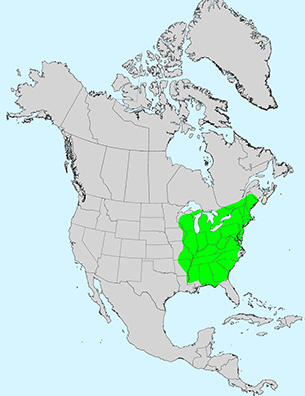
Additional Range Information: Cornus amomum is native to North America. Range may be expanded by planting. Download the full-size PDF map.
More Information: Fall Color

External Links: USDA Plants Database
All material 2021 Virginia Tech Dept. of Forest Resources and Environmental Conservation; Photos and text by: John Seiler, Edward Jensen, Alex Niemiera, and John Peterson; Silvics reprinted from Ag Handbook 654; range map source information