 Virginia Tech Dendrology
blue elderberry Caprifoliaceae Sambucus
nigra ssp. cerulea L. ssp. (Raf.) R. Bolli

 symbol: SANIC5
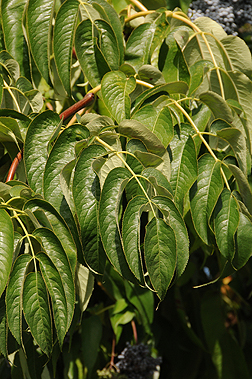
Leaf: Opposite, pinnately compound, deciduous, 6 to 12 inches long, with 5 to 9 lanceolate leaflets, apex pointed and margins serrate, dark green and smooth above and paler below.
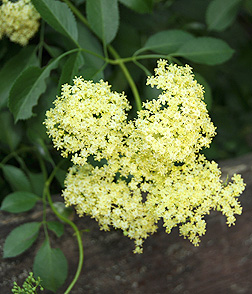
Flower: Perfect, tiny white flowers borne in large, upright, flat-topped clusters, appearing in early summer.
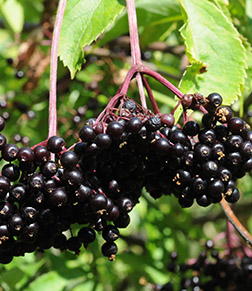
Fruit: Small (1/16 to 1/8 inch), dark blue berry-like fruits covered with a white bloom, borne in upright, flat-topped clusters. Not listed as being toxic to humans when eaten raw, but why take a chance when red elder is toxic?
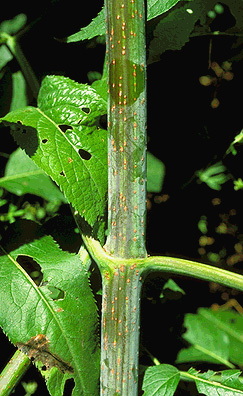
Twig: Stout, soft, and with a large spongy pith; covered with a waxy bloom; opposite buds and leaves. New sprouts may grow 10 to 12 feet in a single year.
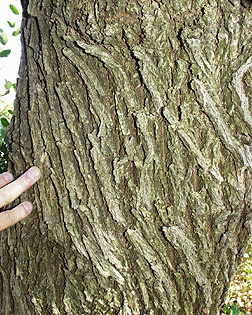
Bark: Grayish brown to black and covered with raised lenticels.
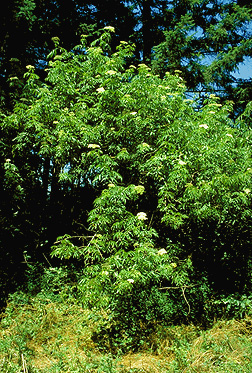
Form: Grows as a large upright shrub or small tree, commonly to 20 feet or more.
Looks like: American elderberry
- red elderberry
- Oregon ash
- boxelder
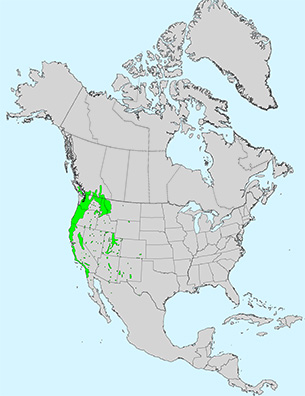
Additional Range Information: Sambucus nigra ssp. cerulea is native to North America. Range may be expanded by planting. Download the full-size PDF map.
External Links: USDAFS FEIS Silvics - USDA Plants Database - Horticulture Information - USDAFS Forest Products Lab
All material © 2021 Virginia Tech Dept. of Forest Resources and Environmental Conservation; Photos and text by: John Seiler, Edward Jensen, Alex Niemiera, and John Peterson; Silvics reprinted from Ag Handbook 654; range map source information