 Virginia Tech Dendrology
Asian plum Rosaceae Prunus
salicina Lindl.

 symbol: PRSA3
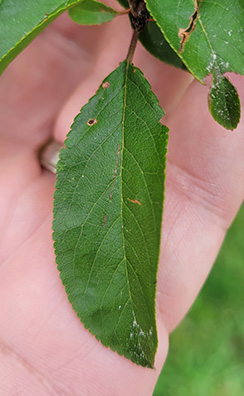
Leaf: Alternate, simple, narrowly ovate to elliptical, finely serrated to scalloped margin, wedge-shaped tip, to 5 inches long and 2 inches wide, green above, and slightly paler beneath.
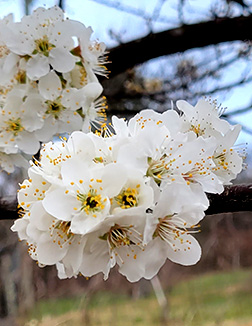
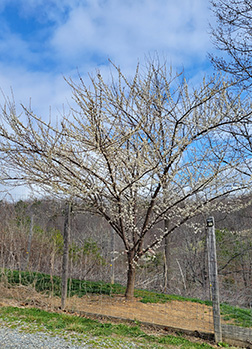
Flower: White, 5 petals with jagged margins, 1 inch across, long filaments, yellow anthers, appear in (mostly) clusters of 3 before the leaves; sepals are hairless. Flowering is very abundant and very early, with freeze damage common.
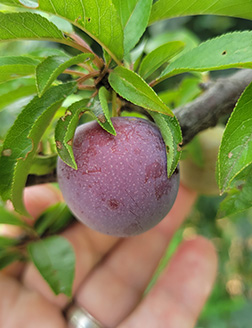
Fruit: Fleshy drupe, nearly round, to 2 1/2 inches across, yellow-green and ripening to reddish purple with glaucous bloom, ripen in mid-summer; flesh maroon and delicious; pit large and wrinkled.
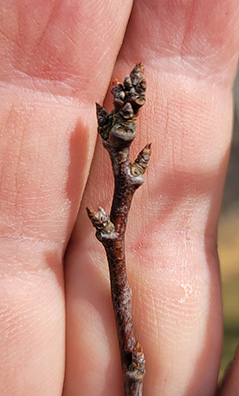
Twig: Slender, reddish brown, leaf scars raised; buds purple-red and pointed; mostly not thorny; fruit borne on spur shoots.
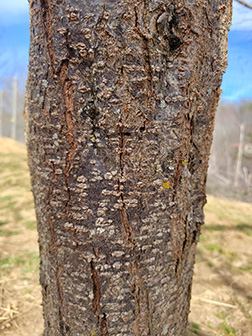
Bark: Initially reddish gray, smooth with numerous horizontal lenticels, later becoming red-brown and rough with irregular ridges.
Form: A small tree with a vase-shaped spreading crown, reaching up to 30 feet tall.
Looks like: American plum
- peach
- sweet cherry
- Mexican plum
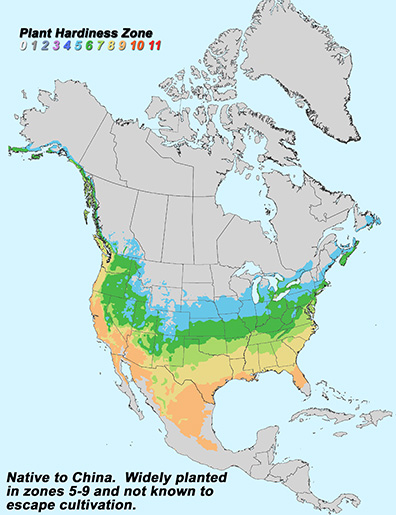
Additional Range Information: Prunus salicina is planted in the USDA hardiness zones shown above and is not known to widely escape cultivaton. Download the full-size PDF map.
External Links: USDA Plants Database
All material © 2021 Virginia Tech Dept. of Forest Resources and Environmental Conservation; Photos and text by: John Seiler, Edward Jensen, Alex Niemiera, and John Peterson; Silvics reprinted from Ag Handbook 654; range map source information