 Virginia Tech Dendrology
blue spruce Pinaceae Picea
pungens Engelm.


 symbol: PIPU
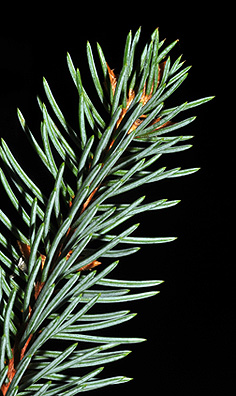
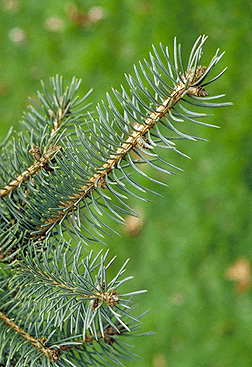
Leaf: Evergreen needles, 3/4 to 1 1/4 inches long, stiff and very sharp (spine-like), displayed nearly straight out from twig, silvery blue to dark green. Strong acidic taste. Each needle borne on a raised, woody peg (sterigma).
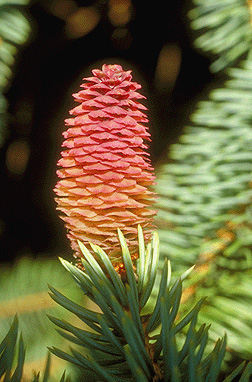
Flower: Species is monoecious; males emerge reddish purple and ripen to yellow-brown, scattered throughout trees; females purple, upright, in tops of the trees.
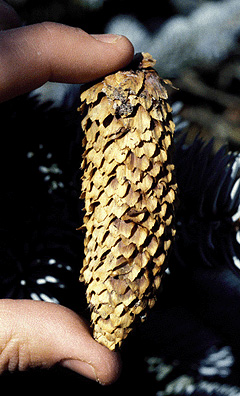
Fruit: Cones are 2 to 4 inches long, cylindrical, light brown in color, scales are flexible, pointed with jagged erose margins, mature in the fall.
Twig: Stout (when compared to other spruces), hairless, tan; needles are borne on woody pegs; bud scales brown and noticeably reflexed.
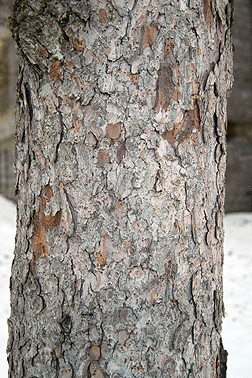
Bark: Gray to red-brown, young trees with small, thin scales; older trees still scaly but with shallow furrows.
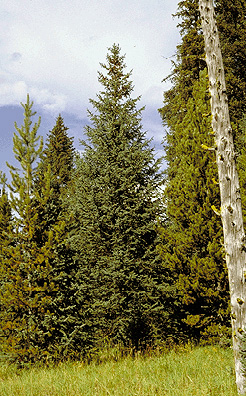
Form: A medium to large tree with pyramidal form reaching up to 80 feet tall. Branches appear layered, especially with age.
Looks like: Engelmann spruce
- Norway spruce
- white spruce
- black spruce
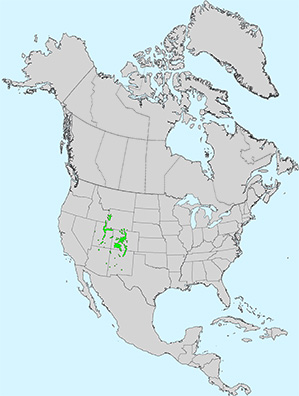
Additional Range Information: Picea pungens is native to North America. Range may be expanded by planting. Download the full-size PDF map.
External Links: USDAFS Silvics of North America - USDAFS FEIS Silvics - USDA Plants Database - Horticulture Information
All material © 2021 Virginia Tech Dept. of Forest Resources and Environmental Conservation; Photos and text by: John Seiler, Edward Jensen, Alex Niemiera, and John Peterson; Silvics reprinted from Ag Handbook 654; range map source information